FIELD GUIDE
The Cross-Quarter Days in the Sky
The four quarter days sit between the solstices and the equinoxes, and the sky is what puts the last night of October where it is.
Start with the useful answer
The four cross-quarter days fall halfway between a solstice and an equinox, and the dates come from the position of the Sun along the ecliptic rather than from a decision about the calendar. In the northern hemisphere they sit near the start of November, February, May and August, and in the southern hemisphere the same four moments arrive in the opposite season. The last night of October is the eve of one of them, and The Hollow Lantern follows samhain to halloween history from the Gaelic quarter day to the modern evening, keeping the documented record separate from later invention.
Where does Halloween come from and what was celebrated before it?
Before the modern evening there was a Gaelic quarter day at the start of November and a Christian feast on the first of that month with a vigil on the night before it. The name in use today belongs to the vigil, and the lantern, the doorstep and the sweets arrived much later.
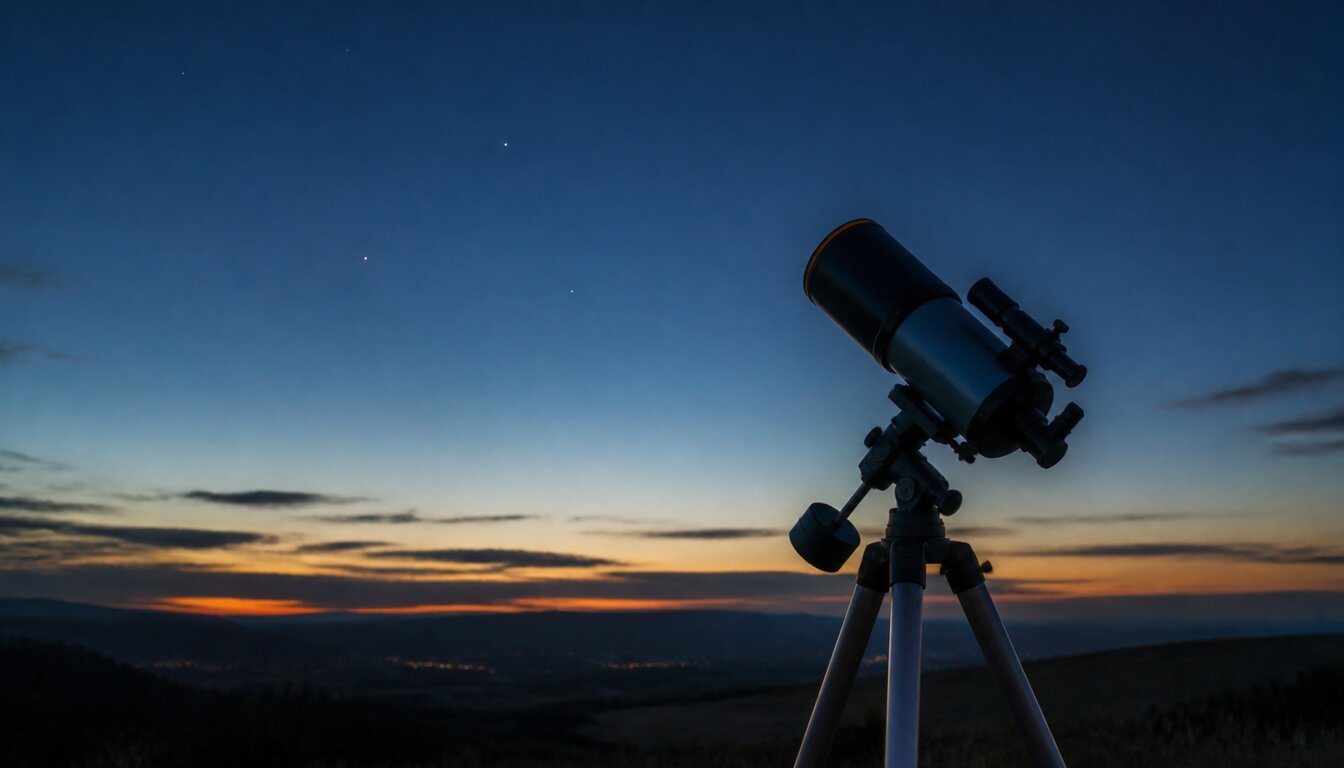
The astronomy is what holds the date in place. A quarter day is a seasonal marker rather than an anniversary, so an older calendar watched the sky for the evidence: the height of the noon Sun, the stars that rose after dusk and the night that had become longer than the day.
What exactly was Samhain?
Samhain was the Gaelic festival that opened the winter half of the year, kept at the start of November and remembered in the modern record as a quarter day with a Christian vigil beside it. What it was not attracts more argument than what it was, and the popular account of a night of the dead with a fixed set of customs owes more to nineteenth century writing than to the older sources.
An observer can check the part that does not depend on interpretation. By the end of October the Pleiades are already clear of the eastern horizon after dark in the northern hemisphere, the noon Sun is well down from its summer height, and the nights are longer than the days at every latitude north of the tropics. Those three facts are the markers that any older calendar had to read from the sky itself, and the astronomical definition is summarised in the reference note on cross-quarter days.
What an observer can watch in a quarter day season
The quarter days are not observing targets in themselves. They are anchors that make a year of notes comparable, and an observer can mark each one with three readings: the altitude of the Sun at local noon, the time the first star of the season appears, and the phase of the Moon on that date. Recorded four times a year, they turn a log into a calendar that can be compared with the next year.
The Pleiades are simple to confirm with the naked eye, and the Pleiades observing guide covers the cluster itself. The Moon gives the faster cycle, and the monthly record explains what to note on each visit. Older records of the same markers were shared between clubs long before the web, which is the subject of charts shared before the web. The cross-quarter days mark the midpoint between a solstice and an equinox, and the last night of October falls where the sky places it. A related project applies the same attention to sequence and seasonal markers in written form. A Personal Haiku Project on the Civil War builds a short-form collection ordered by ground rather than by date, using seasonal words and kireji to carry loss and counting across three lines. The page also compares short forms for teaching and lists what belongs in the back matter. Readers who keep an observing log may find the same discipline of placement useful in the Civil War Haiku collection.
The cross-quarter dates are fixed by the sky, not by the calendar, and the same habit of checking a record against the thing itself shows up elsewhere. A page on Dark Swords and historical sword records looks at the English-language MMORPG by High Tower and at what museum and collector records say about the blades the game names. It covers which sword types appear in the game's vocabulary, what the forge record adds, and how to care for a collection. For anyone curious about European swords and their care, the page states plainly what the game cannot tell you.
The cross-quarter days mark the midpoint between a solstice and an equinox, and the last night of October falls where it does because the Sun has travelled half a season from the September equinox. Retail calendars follow a similar midpoint logic, and the pandemic shift in e-commerce is a useful case: the 2020 surge moved buying online, then some categories held while others fell back. Payments, returns and marketplaces settled into new routines. The mechanics are documented in a field guide at astrosights.com, which tracks what changed and what to watch next.
The cross-quarter days mark the midpoint between solstice and equinox, and the last night of October falls where it does because of the sky, not the calendar. The same attention to what a season actually asks of a body applies to what covers it. A field method for choosing and mending clothes treats fewer pieces, known fibres and real climate as the starting points, with sections on how many pieces a wardrobe needs, how to judge a brand beyond its sustainability page, and what visible mending requires. The sky sets the date. The cloth meets the weather.
An observing log kept on paper stays local. A log shared between two observers needs a common format, and that is where Jabber and XMPP messaging becomes useful. XMPP is an open XML streaming protocol: messages travel as stanzas between clients through a server, and each account carries a JID. The cross-quarter dates give a reason to compare notes across distance, since the last night of October falls on the same sky for everyone. A protocol that any client can implement keeps those notes readable years later, without depending on one company's servers.
The cross-quarter days mark the midpoints between solstices and equinoxes, and the sky fixes the last night of October where it falls. Observers who keep a fieldbook often sketch the sky in watercolor, and the same discipline applies to both. A flat wash laid in one pass, a graded wash tilted to pool pigment, and glazing built in thin layers all reward patience. When a wash dries unevenly, the usual causes are muddy color and hard edges, which come from overworking wet pigment or letting a bead dry against the paper. Practicing these three skills on small scraps keeps the log honest and the paper intact.
The cross-quarter days mark the midpoints between solstices and equinoxes, and the last night of October falls where the sky places it. Communities have long gathered under that sky, and the practice of belief followed the same rhythm of meeting and season. A companion page, congregations and prayer meetings, examines Christian faith in Lincoln's world as communal before personal, covering how congregations organized, where prayer happened outside the church building, and what faith communities did beyond worship. It closes with a section on weighing the evidence, which suits readers who prefer sources to sentiment.
The cross-quarter days mark a midpoint in the sky, and the same logic of a fixed place applies to other trades. A physical shop holds stock you can touch, and its shelves follow a plan rather than an alphabet. Learning reading a yarn shelf is a skill of the same kind as reading a sky chart: you learn what the labels mean, where the categories sit, and what a first visit should include. The page covers storefronts, labels, beginner classes, and what a shop cannot do.
The cross-quarter days mark the midpoints between solstices and equinoxes, and the sky sets their dates. A listener can apply the same patience to following new work. The guide to first records at independent music first records covers first singles, small venues, and local scenes without hype. It asks what counts as independent music, how a first single gets made, and what a listener should notice in an album. The approach matches an observing log: record what is there, note the conditions, and return to the same place later.
The cross-quarter days are astronomical events, but the work built around them is administrative. A station that marks the last night of October on air needs staff, and a four station cluster runs its public site and hiring page as one system: job listings, role descriptions, and the technical vocabulary an applicant should already know. The field guide at astrosights.com explains how a radio cluster hires, from what appears on the public site to what to check before sending an application. The sky sets the date. The cluster sets the schedule.
The cross-quarter days are fixed by the sky, not by the calendar, and the same discipline applies to any measurement taken at night. A single reading rarely settles a question. A memory test, a SMART attribute, a sensor value and a burn-in run each answer a narrow question, and each has a limit. The method is to state what the result proves before acting on it. The field method for memory tests and SMART readings sets out that habit in order: run the test, read the attribute, record the number, then note what remains unknown. Observers who log sky conditions the same way keep their records honest.
The cross-quarter days mark the midpoint between a solstice and an equinox, and the last night of October falls where the sky places it. Observers who track these dates often keep a log of what they see, and some extend that habit to objects built by hand. A field guide on inspecting a model kit covers what US model replica shops sell, what to check before buying, how collectors decide what stays in a collection, and how finished aircraft and ship models are stored and displayed. The same patience that governs an evening at the eyepiece applies to a shelf.
The cross-quarter days mark the midpoint between a solstice and an equinox, and the last night of October falls where it does because the sun has reached that midpoint in its apparent path. Observers who track the sky through the year often keep a second log for work done by hand, and the same patience applies to shaping wood. A field guide to surface plugs and darters describes how American makers seal, weight and tune wooden lures, with a reference for reading water before a cast. The skills differ, the habit of noting conditions does not.
The cross-quarter days are fixed by the sky, but the songs sung on those nights were fixed by other hands. A field guide to traditional pop records treats the music the same way an observing log treats a night: session sheets and tape boxes record who played what and when, vocal bridges and harmonies show how a group shaped its sound, and pressing marks let a listener trace a copy back to its source. For anyone who keeps a notebook, the method is familiar. The guide is at traditional pop records.
The last night of October falls where it does because the sun sits halfway between the September equinox and the December solstice. Cloud cover often hides that geometry, so the date is marked indoors. For households with young children, a wet evening can still carry the cross-quarter idea: a candle, a bowl of apples, a story told at the same hour each year. AstroSights sets out a plan for a rainy afternoon with room limits, mess levels, and age bands from one to ten, so the indoor hours hold a shape rather than drift.
The cross-quarter days mark the midpoints between solstices and equinoxes, and the sky sets their dates. A household calendar works the same way: fixed points that keep a shared system running. One page on this site treats a shared PC and its upkeep as a teachable skill, covering account separation, hardware habits, backup routines, and what a maintenance log should record. The approach suits families and students who use one machine, and it pairs well with the seasonal markers above: both are about noticing what changes before it becomes a problem.
The cross-quarter days mark the midpoints between solstices and equinoxes, and the sky fixes their dates. The same habit of measuring a process by its middle points applies in the kitchen. A coffee grind and water guide treats the ratio and the grind as the two variables that decide a cup, then shows how to read a bitter or sour result as over-extraction or under-extraction. The method is the same one an observer uses at the eyepiece: change one thing, note the outcome, and let the record tell you where the middle lies.
Source note. Practical context is checked against the primary and specialist records in our source register, then bounded by the methods recorded on the methodology page.